Young Researchers Forum
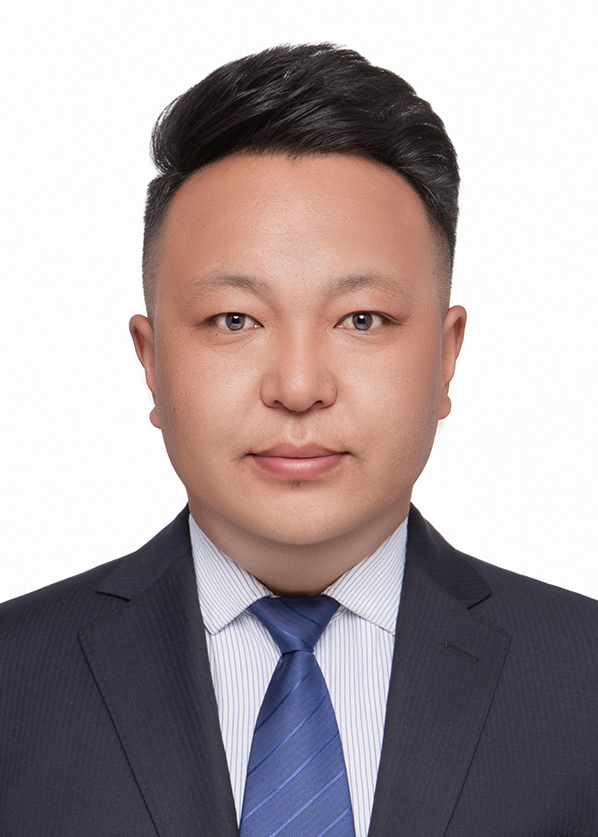
Labadunzhu (Tibetan), Ph.D., is an Associate Professor and Ph.D. Supervisor at the School of Information Science and Technology, Tibet University. His main research interests include Tibetan intelligent information processing and artificial intelligence. He has long been engaged in teaching and research in computer applications and Tibetan information processing. He is currently an Executive Committee Member of the Minority Language Information Processing Professional Committee (MLI) of the Chinese Information Processing Society, a professional member of CCF, and a member of multiple academic societies including the Chinese Information Processing Society, the Chinese Ethnic Linguistics Society, and the China Society of Image and Graphics. He is also an "Entrepreneurship Mentor" for the Tibet Autonomous Region "Chengcai Cup" University Student Extracurricular Academic Science and Technology Works Competition.
In recent years, he has hosted more than 10 scientific research and talent projects including the NSFC Youth Program, the Ministry of Education Humanities and Social Sciences Research Project (the only approved project in the region in 2021, and received "exemption from appraisal" completion), the Tibet Autonomous Region Natural Science Foundation Youth Program, and the Tibet Autonomous Region Natural Science Foundation General Program. He has participated in more than 10 provincial and ministerial-level projects including the National Key R&D Program as a core researcher. He has published nearly 30 academic papers in domestic and international journals and conferences; applied for 5 national invention patents (2 granted, 3 under substantive examination); developed multiple Tibetan natural language processing application software and intelligent interaction systems including Tibetan speech recognition, speech synthesis, and machine translation, with 15 registered software copyrights. He has guided students to win nearly 20 provincial and ministerial-level awards in professional competitions and more than 10 innovation and entrepreneurship training program projects. His research results and technologies have been demonstrated and applied in multiple IT enterprises and universities in the Tibet Autonomous Region, receiving positive user evaluations. He has actively participated in academic frontier dialogues, having been invited to more than 20 domestic and international academic exchanges including the 7th Beijing International Seminar on Tibetan Studies, MNLP 2026, NLPAI 2025, MLIP 2025, MLIP 2023, NCMMSC 2023, CNCC 2022, MNLP 2022, and ICCPR 2021. In the past two years, he has been selected as a national-level young talent candidate, a 2026 National New Era Youth Pioneer, and a Tibet Autonomous Region "Everest Talent" Young Talent. His teaching achievements won the First Prize of the Tibet Autonomous Region 2025 Graduate Teaching Achievement Award, the Special Prize of the Tibet University 2025 Graduate Teaching Achievement Award, and the Third Prize of the Undergraduate Teaching Achievement Award. He has won more than 30 awards and honors including two National Doctoral Scholarships, Tibet Autonomous Region Outstanding Communist Youth League Cadre, National Challenge Cup Outstanding Instructor, Tibet University Outstanding Master's Thesis, Outstanding Doctoral Thesis, Outstanding Graduating Graduate Student, Graduate Student "Academic Star", May Fourth Youth Medal, Outstanding Youth League Secretary, and Outstanding Teacher.
In the era of artificial intelligence moving toward multilingual and multimodal large models, speech synthesis technology remains one of the core technologies for achieving intelligent human-computer interaction, with increasingly prominent academic and application value. This technology has been widely applied in scenarios such as information broadcasting and audiobooks, playing an important role in daily human life. Tibetan speech synthesis technology has undergone more than ten years of continuous exploration, especially with the introduction of deep learning methods, achieving significant progress in this field.
However, as a low-resource minority language in China, Tibetan faces severe challenges in information processing due to factors such as linguistic complexity, scarcity of basic data and computing resources, and relatively weak research forces. Current systems still show significant gaps from real speech in terms of synthesized speech quality, naturalness, and prosodic performance. At the same time, synthesis speed, robustness, and controllability also fail to meet practical application requirements, leaving broad room for exploration in overall research.
Fundamentally, we believe that the basic phonetic characteristics of Tibetan have not been systematically revealed, and the insufficient capabilities of prosodic modeling and acoustic modeling constitute key bottlenecks restricting performance improvement. This talk takes the Tibetan Ü-Tsang dialect as the main research object, and comprehensively explores the key technical aspects of Tibetan speech synthesis around two main threads: in-depth mining of Tibetan linguistic knowledge and end-to-end acoustic modeling, covering Tibetan phonetic structure analysis, complex text feature analysis, prosodic structure prediction, and end-to-end acoustic modeling, aiming to systematically optimize the overall performance of the Tibetan speech synthesis system to achieve practical usability.