Tutorials
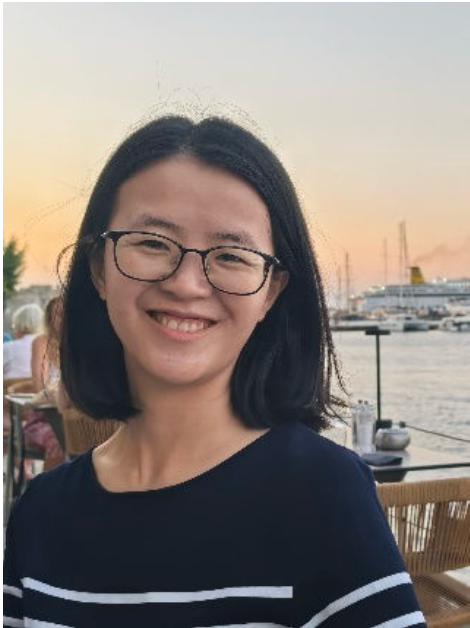
Liping Chen received her Ph.D. in Signal and Information Processing from the University of Science and Technology of China in 2016. From July 2016 to December 2022, she worked at Microsoft Corporation as a Speech Scientist. Since January 2023, she has been a Special Research Associate at the University of Science and Technology of China. Her research interests include speech processing, speech privacy protection, speech generation, and speaker recognition.
In the era of big data, technologies that use speaker attributes (including voice timbre and speaking style) to generate personalized speech have made significant progress and promoted the development of deepfake speech. However, the abuse of deepfake speech has also brought increasingly severe security risks, causing widespread social impact. To address these challenges, technologies related to speaker privacy protection and generated speech trustworthiness have received widespread attention.
This talk focuses on two key technologies: voice anonymization and voice watermarking. Voice anonymization aims to prevent speaker attributes from being extracted and utilized, reducing the risk of speech being used for deepfake generation from the source. According to the relationship between machine perception and human subjective perception, anonymization technologies can be divided into two categories: perception-synchronous and perception-asynchronous. The former changes both machine and listener perception of speaker identity simultaneously, while the latter hides machine-perceivable speaker information while preserving the original subjective listening experience. Voice watermarking embeds imperceptible identification information in generated speech, marking it as generated speech, and providing technical support for recognition, traceability, and trustworthy verification of generated speech.
This talk will systematically introduce the basic principles, representative methods, technological development history, and current challenges of voice anonymization and voice watermarking, and look forward to future development directions. Through this talk, we hope to help the audience establish a comprehensive understanding of voice anonymization and voice watermarking technologies, providing reference for related research and applications.